
Appraisal Reports to Help Co-Heirs Agree in St Petersburg
A home can be appraised years after its owner’s death. An appraisal report to convince co-heirs in St. Petersburg can estimate the property’s value as of the date of death, using property details and market evidence relevant to that date. It provides a documented basis for discussion, but cannot guarantee that every heir will agree.
A current listing estimate and a date-of-death appraisal serve different purposes. The historical appraisal looks back to a specific date, while a listing value helps inform a possible sale today. Keeping that distinction clear can make conversations about an inherited home more grounded.
This article explains when a retrospective appraisal may be possible, how it differs from a listing value, and what records can document appraisal costs in an estate buyout discussion. It also covers how a clearly explained valuation can support a more productive conversation among co-heirs.
Table of Contents
Can I get reimbursed for the appraisal by the co-heir?
An appraisal invoice alone does not establish that a co-heir must reimburse you. It documents an expense, while the estate’s distribution depends on the applicable estate process, agreements, and decisions about shared costs. Keep the valuation question separate from reimbursement: a report can support the home’s value without deciding who pays for it.
For an estate settlement, fair market value means the amount a willing, informed buyer and seller would agree on when neither is forced to act. An independent appraisal gives heirs a professional valuation to discuss instead of relying only on one heir’s estimate. In St. Petersburg, the report should address the property and valuation date relevant to the estate’s decision. The value can inform a proposed buyout, but does not determine how all estate assets are distributed.
Reimbursement is a separate issue. The personal representative or heirs may consider whether the appraisal was authorized, necessary for estate administration, or agreed to as a shared cost. Keep the engagement terms, invoice, proof of payment, report, and communications explaining the appraisal’s purpose together. Present the amount as a documented expense, not an automatic debt owed by another heir. A written agreement can specify whether the estate account will repay the person who advanced the cost or whether heirs will share it another way.
For federal estate tax filing, Form 706 is due nine months after the date of death. An automatic six-month filing extension is available with Form 4768. A certified appraisal is mandatory when an estate is large enough to require Form 706. In that situation, the valuation and invoice can help document why the work was obtained. Filing requirements and the deadline are separate from an heir’s reimbursement request.
For a St. Petersburg estate, base the reimbursement discussion on the applicable Florida estate process and the family’s agreements. A statute from another jurisdiction does not establish payment rules for this estate. Keep the questions focused: who approved the appraisal, what estate decision it supported, and how the cost should be recorded? The appraisal’s value conclusion and the treatment of its invoice are separate decisions.
To support a reimbursement request, submit the invoice and payment record with a short explanation of the appraisal’s role in the estate valuation or buyout. Ask that the expense be recorded in the estate account and included in the distribution discussion. If co-heirs disagree, separate the documented cost from the property’s appraised value. Resolving one issue does not automatically resolve the other.
Do You Need Separate Appraisals for Date-of-Death Value and Listing Price?
A date-of-death appraisal and a listing opinion answer different questions. The first estimates market value on the date the owner died. The second considers a possible asking price in today’s market. For inherited property, the earlier valuation can support records used to establish heirs’ tax basis. A current listing figure cannot replace evidence about the property and market conditions on the earlier valuation date.
This distinction matters when heirs discuss a stepped-up cost basis. The date-of-death value may serve as a reference point for the inherited property’s basis, which is relevant when calculating capital gain after a later sale. The appraisal assignment should clearly identify its effective date and purpose. An attorney handling the estate can explain why a current pricing opinion does not answer a historical valuation question. For heirs seeking an appraisal report to convince co-heirs in St. Petersburg, the assignment’s date and purpose should be clear.
A later sale price can differ from a property's date-of-death value. A sale price above an inherited property's basis may be relevant when assessing whether a taxable gain occurred. The comparison depends on the date-of-death valuation, not simply on a listing estimate prepared for the later sale. Heirs should keep the report and sale records together so the figures can be understood in context.
A listing price is a marketing decision, not necessarily an independent opinion of historical market value. A comparative market analysis or broker price opinion can help with pricing, but offers limited support for stepped-up-basis documentation. A formal appraisal addresses a defined assignment and valuation date. Its inspection, property description, and analysis can explain how the appraiser reached the opinion.
Separate assignments may be useful when the estate needs both historical documentation and a current selling strategy. The date-of-death report focuses on the earlier date; a current pricing analysis addresses today’s sale conditions. One figure should not be expected to serve both purposes. A clearly scoped appraisal report to convince co-heirs in St. Petersburg can help them discuss the right valuation question without treating a listing target as proof of tax basis.
For an appraisal intended to document inherited property, the assignment should state the relevant date and intended use. A report following USPAP can provide a structured basis for reviewing the valuation. If the family later lists the home, current pricing can be considered separately. A Pre-Probate Inherited Properties Appraisal can address valuation needs before probate decisions are finalized.
Can You Get a Date-of-Death Appraisal Years After Someone Dies?
Yes. A retrospective appraisal can estimate a St. Petersburg property’s fair market value as of the owner’s date of death, even years later. For homes, condos, and waterfront properties, the appraiser may compare relevant sales and account for differences in location, condition, features, and market timing. The report should state the valuation date clearly.
The key is the valuation date, not the date the appraisal is ordered. An appraiser familiar with Pinellas County can research records and comparable sales relevant to the earlier date, then explain how those facts support the opinion. A present-day inspection can document the property’s current condition, but later changes may need separate consideration when describing its historical state.
Pinellas County’s records provide useful context, but a county figure is not the same as an individual property valuation. The county has 437627 real property parcels, each with different characteristics and market evidence. A retrospective assignment focuses on the inherited property itself, its condition on the effective date, and comparable transactions that help explain its value then.
Commercial properties require an approach suited to how the asset is used. For an income-producing building, an appraiser may analyze income and expenses alongside market evidence. Comparable sales can also inform the conclusion when suitable transactions exist. The report should identify the property interest and valuation date, since a commercial asset’s income, occupancy, and physical condition can change over time.
Form 706 includes Schedule F for household goods and personal effects. If estate records require values for furnishings or other personal property, those items need attention distinct from the home’s real-estate valuation. A house appraisal does not automatically value its contents. An organized inventory, photographs, and records from the relevant period can help clarify which assets need separate valuation work.
For a family buyout, a historical appraisal can give co-heirs a shared reference point before discussing one heir’s purchase of another’s interest. Keep the report’s effective date and intended use visible in the discussion. If the buyout instead uses current value, a current valuation addresses a different question. Petersburg can help keep those valuation purposes distinct.
When selecting an appraiser for inherited property, prioritize local market familiarity and experience with retrospective assignments. Ask that the scope identify the date being valued and the property type. For St. Petersburg homes, condos, and waterfront properties, relevant comparable sales and property-specific analysis help explain differences across neighborhoods and locations. The appraisal’s reasoning matters as much as its final value.
Documenting appraisal necessity and fees
For a St. Petersburg estate buyout, document why the appraisal was needed and how its cost was handled. The report supports a real estate valuation; the invoice records the appraisal cost. Neither document alone decides whether an heir or the estate should pay. Keeping the purpose, assignment, and payment record together makes the expense easier to review alongside other estate assets.
Start with a written explanation connecting the appraisal to a specific estate decision. For example, state that co-heirs need an independent death-date value to discuss one heir buying the property. If the appraisal instead supports a sale, identify that purpose. A clear explanation distinguishes the valuation’s intended use from a general request to share expenses.
Assignment records: Keep the engagement terms and note the property and valuation date.
Payment evidence: Retain the itemized invoice and proof of payment.
Valuation support: File the completed report with the estate’s property records.
Decision trail: Save written approvals, objections, or agreements about paying the cost.
Submit these records together to the personal representative or include them with the estate account for review. Label the expense clearly, such as “appraisal for inherited property buyout,” rather than combining it with unrelated property costs. If one heir advanced the payment, show who paid and whether the other heirs agreed to share it. The records document the request, not an automatic right to reimbursement.
Keep the appraisal’s purpose separate from its conclusion. A report estimating fair market value as of the date of death answers a different question from a current listing analysis. If the heirs are deciding a present-day buyout, clarify which valuation date they are discussing. This distinction helps prevent an invoice for historical analysis from being mistaken for evidence of today’s price.
The appraisal cost depends on the property, assignment scope, records needed, and timing, and is provided after a quote request. Keep the quote with the final invoice so the estate account shows the agreed scope and billed work. If the assignment changes, retain the updated terms as well. A clear paper trail helps explain any difference between the initial quote and final charge.
Before final distribution, present the report, invoice, payment proof, and written explanation together. A concise cover note can identify the estate decision the appraisal supported and who paid. Co-heirs can then review the valuation and proposed expense treatment as separate items, with the estate’s records showing how each decision was documented.
What information is included in a formal home appraisal report
A formal home appraisal report documents the valuation assignment and explains how the appraiser reached a value opinion. For co-heirs reviewing an inherited St. Petersburg home, its value lies in the analysis, not just the final figure. The report brings together property details, relevant market evidence, and the effective valuation date.
The report identifies the property and the assignment’s purpose. It states the address, property type, intended use, and effective date of value. Those details matter when the report concerns the date of death rather than a current sale. For example, a report prepared for an estate buyout should make clear which date its conclusion represents.
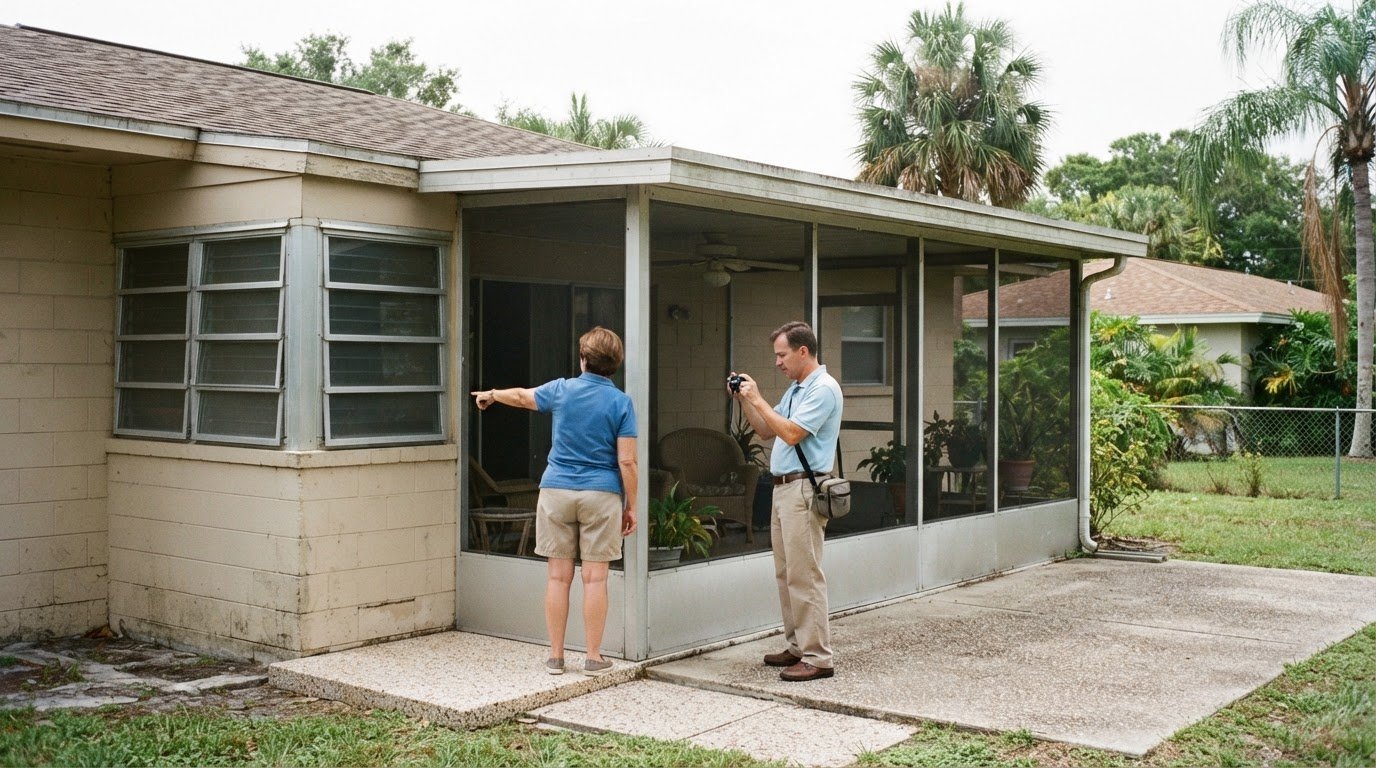
The property description and condition provide context for the analysis. The report can describe the home’s location, layout, size, features, and observed condition. It may also identify inspection limitations, such as inaccessible areas. Co-heirs can use these details to understand what the appraiser considered and whether the report describes the property they are discussing.
Market evidence shows how the appraiser evaluated the home against relevant sales. The report typically identifies comparable properties and discusses meaningful differences, such as location, size, condition, or features. A nearby sale is not automatically a suitable comparison. The written analysis should explain why the selected properties help inform the subject home’s value on the stated effective date.
Look for the reasoning that connects the comparisons to the final opinion. Adjustments and explanations help readers follow how property differences influenced the analysis. If a comparable differs substantially from the inherited home, the report should explain how that difference was considered. This transparency gives co-heirs specific points to review instead of leaving them to debate an unsupported number.
Scope and assumptions also shape how to read the report. It may describe the inspection performed, information relied upon, and any limiting conditions. An appraiser’s certification identifies responsibility for the work and affirms the report’s stated basis. For a retrospective assignment, confirm that the effective date appears consistently in the report’s purpose and valuation discussion.
Property and assignment: Address, purpose, intended use, and effective date.
Inspection and condition: Observations, features, and stated limitations.
Market analysis: Comparable sales, differences, and valuation reasoning.
Conclusion: The value opinion, assumptions, and appraiser certification.
For a family discussion, share the complete report, not only its conclusion page. If the assignment date or property description doesn’t match the estate’s question, the document may not address the issue co-heirs need resolved. Request an appraisal for an estate valuation when a documented analysis is needed for the property.
Meridian Property Appraisers
Meridian Property Appraisers Inc. provides residential valuation reports that give co-heirs a documented basis for discussing an inherited home. Its Pre-Probate Inherited Properties Appraisal is relevant when heirs need a property valuation to inform estate decisions. If the family is considering a sale, a Pre-Listing Appraisal serves a different purpose: supporting a pricing decision for the property.
For a useful assignment, the valuation date and intended use should match the question the heirs need answered. A date-of-death value and a current listing value serve distinct purposes, so an accurate appraisal report to convince co-heirs St Petersburg can help keep discussions focused. Meridian Property Appraisers Inc. also provides Divorce Appraisal and FEMA Appraisal services for those separate valuation needs.
If a documented residential valuation would help your family discuss next steps, contact Meridian Property Appraisers Inc.
Put the Next Estate Decision on Solid Ground
Before co-heirs settle on a buyout or sale, agree on the valuation question they need answered. Is the decision about a past estate date, a current transaction, or both? A clear purpose keeps the family discussion focused and gives everyone a defined basis for reviewing the appraisal.
A St. Petersburg appraisal report to help convince co-heirs can support a more informed conversation, but agreement also depends on how heirs interpret the report and handle shared decisions. Keep the valuation purpose distinct from the family’s decision about appraisal expenses, and record any agreement in writing. This gives the next step a practical foundation.
For a separate valuation need, Meridian Property Appraisers also offers Divorce Appraisal services. If you’re ready to discuss an inherited property valuation, contact Meridian Property Appraisers. A measured, well-documented next step can help your family move forward with greater clarity.
Frequently Asked Questions
Do You Need an Appraisal When You Inherit Property?
Not every inherited property decision calls for an appraisal, but a documented valuation can help with an estate filing, buyout, or planned sale. For example, heirs who disagree about one person keeping the home may use an independent opinion as a negotiation reference. Families in Tampa, Saint Petersburg, Orlando, Jacksonville, Clearwater, Largo, Pinellas Park, Seminole, Miami, and Fort Lauderdale can also distinguish a historical estate value from a current sale decision.
What Happens If Heirs Disagree About the Appraised Value?
Start by identifying the exact point of disagreement, such as the effective date, property condition, or comparable sales. Ask the appraiser to explain the relevant analysis, then share that explanation with all heirs. If a specific issue remains unresolved, the family could agree on a second independent appraisal or another review process. Keep the discussion focused on evidence and the valuation’s intended use, rather than treating a difference of opinion as proof of error.
What Happens If the Property Changed After the Owner Died?
Separate changes made after the owner’s death from the property’s earlier condition. Retain renovation invoices, dated photographs, permits, or contractor records to show what changed and when. These materials can help an appraiser distinguish later improvements from features present on the valuation date. A current walkthrough alone may not show the home’s earlier condition, especially if rooms, systems, or finishes have since changed.
How Can an Appraisal Help Resolve a Disagreement Among Co-Heirs Over a Property's Value?
An appraisal gives co-heirs a common reference for discussing value, even if it does not settle every question about the estate. Share the full report and invite each heir to identify a particular assumption or comparable they question. For instance, one heir may point to a renovated nearby sale, while another notes that the inherited home needs work. Specific issues make for a more productive discussion than competing estimates without supporting evidence.
How Can Co-Heirs Split an Inherited St. Petersburg Property Using an Appraisal and Buyout?
Use the agreed valuation as a starting point, then review ownership shares and estate records before calculating a buyout. If one heir keeps the home, the family can discuss how that heir compensates the others for their interests. Account for any agreed credits or obligations separately from the property value. Put the calculation, payment terms, and transfer arrangements in writing so each heir can review the same proposal.
What Should I Do If Co-Heirs Refuse to Accept an Appraisal or Agree on the Property's Value?
Ask each heir to explain why they reject the report, then sort objections into factual questions and disagreements about the proposed outcome. A concern about property condition may call for additional documentation; a concern about comparable sales may need a focused explanation. Preserve the report and written responses. If discussions remain stuck, heirs can discuss options with the estate’s attorney and agree on a neutral next step.


Comments