
Bankruptcy Property Appraisal in Miami: Costs and Valuation Options
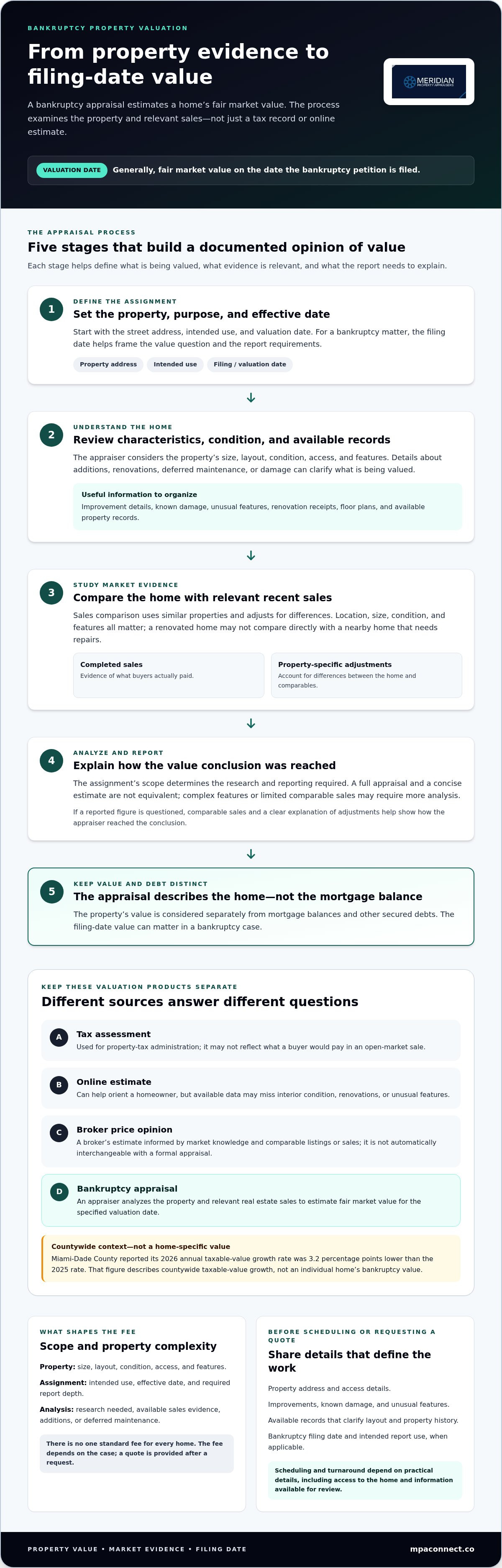
A tax assessment isn’t the same as a bankruptcy valuation. For bankruptcy exemptions, property value generally means fair market value on the date the petition is filed, according to the United States Government Publishing Office. The appraisal fee depends on the property and assignment scope, and Meridian Property Appraisers Inc. provides a quote after you request one.
It’s understandable to want a clear valuation and a reliable timeline when a home’s value may affect bankruptcy proceedings. The appraiser considers the property’s characteristics and market evidence. Scheduling and turnaround depend on practical details, including access to the home and the information available for review.
This article explains how an appraisal is conducted, how it differs from a tax assessment, and when a full report may be relevant. You’ll also learn what can affect the fee, what to prepare for scheduling, and how a valuation may be reviewed in a bankruptcy case.
Table of Contents
Real estate appraisal and other property valuation
A home’s value can mean different things in a tax record, an online estimate, or a bankruptcy filing. A bankruptcy appraisal estimates fair market value using property details and relevant real estate sales. It describes the home itself; mortgage balances and other secured debts are considered separately. A tax assessment serves a different purpose and may not reflect what a buyer would pay in an open-market sale.
In Miami, a bankruptcy appraisal and a broker price opinion are different products. An appraiser develops a valuation through property analysis, while a broker price opinion is a real estate broker’s estimate informed by market knowledge and comparable listings or sales. Their methods and report details differ, so a BPO isn’t automatically interchangeable with an appraisal when a formal valuation is needed.
Miami-Dade County identifies and appraises real and tangible personal property and determines each property’s exemption or classification status. Assessed value is used for property-tax administration; market value estimates a likely sale price under market conditions. Miami-Dade County reported that its 2026 annual taxable-value growth rate was 3.2 percentage points lower than the 2025 rate. That countywide figure describes taxable-value growth, not an individual home’s bankruptcy value.
Sales comparison makes a market estimate more specific. The appraiser considers recent sales of similar properties, then adjusts for differences such as location, size, condition, and features. For example, a renovated home may not compare directly with a nearby property needing repairs. In a Miami purchase or sale, list prices show the competition, while completed sales offer evidence of what buyers actually paid. The home’s own characteristics still matter.
Online real estate estimates can help orient a homeowner, but they rely on available data and may miss interior condition, renovations, or unusual features. A model may group a waterfront home with properties that lack the same access or view. Treat an online figure as a starting point, not a substitute for an inspection and documented sales analysis when accuracy matters in a bankruptcy filing.
An estate representative or homeowner can organize records that clarify the property’s condition and history. Useful examples include renovation receipts, floor plans, and information about significant damage. Legal services address legal questions, while an appraisal provides an opinion of property value; neither replaces the other. If a trustee questions the reported figure, comparable sales and a clear explanation of adjustments help show how the appraiser reached the conclusion.
For a bankruptcy property appraisal in Miami, focus on the valuation date, the home’s actual condition, and comparable closed sales. Keep the tax assessment, online estimate, broker opinion, and appraisal distinct. Each may provide context, but each answers a different question about the property.
Full appraisal pricing
A full appraisal fee reflects the work needed to inspect and analyze a specific property. In Miami, the scope can vary between a straightforward condominium and a waterfront home with unusual features. The appraiser considers the property’s size, layout, condition, access, and available sales evidence. These details affect the research and reporting required, so there isn’t one standard fee for every home.
The assignment’s intended purpose also shapes the work. A bankruptcy valuation may need to address a particular effective date and explain how the appraiser reached the value conclusion. A property with additions, deferred maintenance, or limited comparable sales may require more analysis than a similar home with clear records and nearby sales. The report’s required depth matters, too. A concise estimate and a full appraisal aren’t equivalent products.
For a property appraisal, the fee depends on the case and is provided after a quote request. Cost factors include property size, condition, access, assignment scope, and the research and analysis required. A quote should reflect the property and requested report. For example, a home with a detached structure or extensive renovations may need analysis beyond the primary living area. Clear details at the outset help define the work accurately.
Before requesting a quote, gather practical property information. The street address identifies the location and relevant market area. A list of improvements, known damage, and unusual features helps describe the assignment. Available property records can clarify the home’s layout and history. If the appraisal relates to a bankruptcy filing, the filing date and report’s intended use help frame the valuation question. An attorney may coordinate these details with the appraisal request.
Compare quotes by scope, not price alone. Confirm whether the assignment includes an interior inspection, market research, analysis, and a written report. Provide the property information needed to define the assignment and make sure the scope addresses the bankruptcy purpose. A limited opinion may not cover a full appraisal report. Likewise, a complex property may require more analysis than a typical residence in the county.
Cost and value serve separate purposes. The appraisal fee pays for the valuation work; the resulting opinion helps determine how the property is represented in the case. If you’re concerned about losing equity, focus first on an accurate, clearly explained report rather than substituting an online estimate for the requested analysis. Sharing the property’s features and assignment needs when requesting a quote makes the scope easier to define.
Appraisal scheduling and turnaround times
Scheduling starts by defining the assignment: the property address, intended use, and valuation date. For bankruptcy, the filing date matters because the reported value relates to the property at that point. Share the filing schedule with the appraiser early so the inspection and research can align with the report’s purpose. An attorney can explain relevant case deadlines, while the appraiser focuses on the property valuation.
Next, coordinate access to the home. The appraiser needs to view the areas and features relevant to the assignment, so identify who can provide entry and when the property is available. For a condominium, note building access procedures and any limits on viewing shared facilities. For a house, arrange access to additions, garages, and other structures that contribute to the property description.
Prepare useful records before the inspection. A floor plan, renovation details, and information about known damage can help the appraiser understand the home. If an owner recently replaced major components or completed an addition, provide records describing the work. These materials don’t replace direct observation, but they can clarify features that aren’t obvious during a brief walkthrough.
After the inspection, the appraiser researches recent comparable sales and analyzes differences between those properties and the home being appraised. The depth of this work depends on the property’s characteristics and the available market evidence. A home with unusual features or few comparable sales requires more analysis than one with clear similarities nearby. A complete report also takes time to organize the evidence and explain the conclusion.
Turnaround depends on several connected steps: arranging access, completing the inspection, reviewing property information, researching the market, and preparing the written report. Delays in entry or missing records can interrupt the process. A clear contact person, accurate address, and organized documents help keep communication focused. If a filing deadline is approaching, share it at the outset rather than after the inspection.
Income records serve a different purpose. They may be relevant to bankruptcy disclosures or repayment considerations, but they don’t establish a home’s real estate value. Keep the valuation assignment focused on the property and its market evidence. The bankruptcy district handling the case and its filing schedule help frame when the report is needed; they don’t replace the appraiser’s inspection and analysis.
For an appraisal that fits your schedule, organize the property details, access arrangements, and filing information before requesting one. This gives the appraiser a defined scope and a practical path from inspection to report. It also helps the attorney understand what the valuation addresses, without confusing the appraisal process with income review or other bankruptcy paperwork.
Appraisals for bankruptcy matters
A bankruptcy appraisal documents a home’s value for a specific filing purpose. It can be particularly important when equity, exemptions, or foreclosure concerns affect how owners report property.
Bankruptcy Appraisal Purpose
A bankruptcy appraisal is a supported opinion of a property’s fair market value as of the filing date. It shows the real estate value separately from the debt secured against it. That distinction matters because equity, rather than the home’s gross value alone, can affect how assets are treated.
In Chapter 7, a trustee may sell a home with non-exempt equity and distribute proceeds to creditors. A trustee markets a home at fair market value, not a quick-sale value. In Chapter 13, property values can affect the repayment plan, even though assets aren’t liquidated. A full appraisal is necessary to strip a second mortgage in Chapter 13.
Exemptions also make accurate valuation important. Bankruptcy filers can use the homestead exemption under 11 U.S.C. § 522 to protect qualifying home equity. Florida’s homestead exemption protects the entire homestead regardless of its value. The appraisal establishes a value opinion; it doesn’t determine which exemption applies or resolve legal questions about ownership.
Appraiser Qualifications for Court Acceptance
A real estate appraiser prepares a bankruptcy appraisal by inspecting the property, analyzing market evidence, and explaining the value conclusion. The valuation should address the home and the bankruptcy purpose. A report’s usefulness depends on its supporting details, including the property description, valuation date, and comparable-sale analysis.
A trustee reviews the debtor’s reported home value and may request an independent appraisal or supporting documents if they disagree. If the valuation is disputed, the bankruptcy judge decides the issue. A report should clearly identify its effective date and explain how the property’s condition and comparable sales support its conclusion.
Owners can help the appraiser by providing accurate property details, access, and records of renovations or damage. For example, documentation of a completed addition can clarify a feature that may affect comparable sales. The appraiser’s analysis should distinguish observed facts from assumptions and explain adjustments, making the reasoning easier to follow during review.
A bankruptcy court doesn’t treat a property tax value as a substitute for a sale-based valuation. A county assessment serves tax purposes, while a bankruptcy appraisal addresses market value for the relevant filing date. If a trustee challenges the figure, a well-supported report gives the parties a clear basis for discussing the valuation and equity calculation.
Keep the appraisal focused on the real estate value. Mortgage balances, exemption claims, and foreclosure issues are related but separate matters. A clear report helps attorneys and trustees review the property value without confusing it with the amount owed or the legal protection claimed.
How bankruptcy asset evaluation works in Miami, Florida
A debtor can challenge a property appraisal by presenting a different valuation and supporting evidence; a trustee can also request an independent appraisal or challenge the reported value. The appraisal informs equity and exemption calculations by establishing the home’s value, which is considered separately from the mortgage balance and exemption claimed.
Start with a complete asset description. Bankruptcy debtors must accurately declare and value assets, including real estate, and report an asset’s value separately from debt secured by it. For a Miami home, the valuation concerns the property itself; the mortgage balance is a separate liability. Mixing those figures can obscure the equity available for exemption analysis.
For bankruptcy exemptions, property value generally means fair market value on the petition filing date, according to the United States Government Publishing Office. That date anchors the analysis, even if the real estate market changes later. A valuation should describe the home’s condition and use evidence relevant to that date, rather than treating a tax assessment or later sale price as automatically equivalent.
Next, Florida exemptions are applied to determine which assets are protected. Bankruptcy filers can use the homestead exemption under 11 U.S.C. § 522 to protect qualifying home equity. Florida’s homestead exemption protects the entire homestead regardless of its value. The appraisal supplies the value evidence; exemption eligibility and application are separate legal questions.
Chapter 7 and Chapter 13 treat property values differently. In Chapter 7, a trustee may find no assets available for liquidation, or may liquidate certain assets to pay creditors. If a home has non-exempt equity, the trustee can sell it and distribute non-exempt proceeds to creditors. In Chapter 13, assets aren’t liquidated, but their values directly affect the repayment plan.
Consider a homeowner whose reported value is disputed. The trustee can request an independent appraisal or supporting documents, then challenge the bankruptcy if the disagreement remains significant. The debtor can respond with a well-supported valuation, property records, and evidence addressing condition or comparable sales. If the valuation dispute reaches court, the bankruptcy judge decides it.
For equity analysis, compare the supported property value with secured debt, then consider the applicable exemption. The resulting non-exempt equity can matter to Chapter 7 liquidation or a Chapter 13 plan. A junior lien can also be relevant: in Chapter 13, a debtor may strip a junior lien if the first-mortgage balance exceeds the property’s value.
Keep the appraisal, mortgage statement, and exemption information organized as separate records. To prepare property valuation details for review, connect about your appraisal needs.
Meridian Property Appraisers Inc.: Pre-Probate Inherited Properties Appraisal
Meridian Property Appraisers Inc. provides a Pre-Probate Inherited Properties Appraisal for people who need a documented valuation of inherited real estate before probate. It can help establish a property’s value for estate-related planning and discussions. If an inherited home is also part of a bankruptcy situation, keep the appraisal’s purpose and valuation date clear, since the filing may require a value tied to that date.
Share relevant property information, such as the address, known improvements, and any damage, to help define the assignment. Meridian also provides Pre-Listing Appraisal, Divorce Appraisal, and FEMA Appraisal services.
Contact Meridian Property Appraisers Inc. or visit mpaconnect.co to discuss your appraisal needs.
Make your next property decision with clarity
A property valuation is most useful when it matches the decision in front of you. Before taking your next step, identify what the report needs to address and organize the property records that support that purpose. This helps keep conversations with your attorney and appraisal professional focused on the same question.
For other real estate valuation needs, Meridian Property Appraisers Inc. provides Pre-Probate Inherited Properties Appraisal, Pre-Listing Appraisal, and Divorce Appraisal services. Each addresses a distinct purpose. For a bankruptcy property appraisal in Miami, clear information about the property and intended use helps frame the assignment.
When you’re ready to discuss your appraisal needs, contact Meridian Property Appraisers Inc. A clear next step can make a complex property decision easier to approach.
Frequently Asked Questions
How Is a Professional Bankruptcy Asset Evaluation Conducted?
A professional appraisal combines a property inspection with market analysis and a written explanation of value. The appraiser records relevant features, condition, and factors that distinguish the home from comparable sales. For example, a finished addition or unrepaired damage may affect which sales provide useful comparisons. The report presents the analysis for review, while a trustee may request supporting records if the reported value is questioned.
What does a bankruptcy property appraisal in Miami cost?
The fee for a bankruptcy property appraisal in Miami depends on the case and is provided after a quote request. Property size, condition, access, assignment purpose, and required research all influence the scope. A home with unusual features may require different analysis than a straightforward residence. For residential appraisal requests in Tampa, Saint Petersburg, Orlando, Jacksonville, Clearwater, Largo, Pinellas Park, Seminole, Miami, and Fort Lauderdale, provide the property details and intended use when requesting a quote.
How is real estate valued in a Florida bankruptcy case?
Real estate is generally valued at fair market value as of the bankruptcy petition filing date. The appraisal addresses the property itself, while mortgage debt and exemption claims are considered separately. For example, a homeowner with a mortgage should report the home’s value and the secured balance as distinct figures. In Florida, the applicable exemption can affect how equity is treated, but it doesn’t change the appraiser’s estimate of market value.
What documents are needed for a bankruptcy property appraisal?
Useful records include the property address, available floor plans, renovation details, and documentation of known damage. A mortgage statement can help distinguish the property’s value from secured debt, while filing information clarifies the relevant valuation date. For example, receipts or permits describing a completed addition may help explain a feature during the inspection. Organize records by topic so the appraiser can identify which details relate to the home and assignment.
How long does a Miami bankruptcy appraisal take?
Turnaround depends on access to the property, the completeness of available records, and the analysis required for the assignment. The inspection is followed by market research and report preparation, so an unusual home or limited comparable sales can add work. To reduce avoidable delays, arrange entry, identify a contact person, and gather property documents before scheduling. If a court or filing deadline matters, share that timing at the beginning of the assignment.
What appraisal standards and valuation date apply in bankruptcy court?
The valuation date is generally the petition filing date, and the opinion should address fair market value as of that date. A useful report explains the property’s condition, the market evidence reviewed, and how the analysis supports its conclusion. The court may review the report if the value is disputed. Keep the effective date clear, especially if the inspection or report preparation happens after filing.
How do property condition, liens, and comparable sales affect a Miami bankruptcy valuation?
Condition affects which comparable sales are most relevant and whether adjustments are needed. A recently renovated home may not align with a nearby sale involving deferred maintenance. Liens and mortgage balances are separate from the property’s market value, but they matter when calculating equity. The appraiser analyzes comparable sales to estimate value; debt information is considered separately in the bankruptcy asset review.



Comments