
Post-renovation appraisal value in St Petersburg and home value
A post-renovation appraisal can document your home’s updated value when you’re considering refinancing or reviewing insurance coverage. The post-renovation appraisal value in St. Petersburg reflects the property’s condition and features at the time of the appraisal, including finish quality, floor-plan functionality, kitchen and bathroom updates, and energy-efficient features.
Completed work can affect value, but the result depends on how the improvements fit the home as a whole. This article explains when an updated appraisal may help, how appraisers assess renovation quality and layout, and how an as-repaired value differs from a home’s current-condition value. It also covers how a clear scope of planned work helps describe the expected finished condition, and what to consider when using an appraisal for refinancing or insurance decisions.
Table of Contents
Appraiser review of finish quality and layout
During an interior inspection, an appraiser considers both finish quality and floor-plan functionality. In St. Petersburg, renovated surfaces are assessed as part of the home’s overall condition, not as isolated design choices. For homeowners assessing post-renovation appraisal value in St. Petersburg, workmanship, completeness, and the relationship between improvements and nearby rooms all matter. A new kitchen may look polished, but the appraisal describes the property as it stands, including visible improvements and remaining limitations.
Finish quality refers to the standard and condition of completed work. An appraiser may observe whether materials appear consistently installed and whether the renovation looks complete. For example, aligned cabinet doors, neatly finished countertop edges, and intact flooring present differently from exposed gaps, damaged surfaces, or unfinished trim. These observations help describe condition, but a particular finish does not guarantee a specific value. Personal taste, such as a preference for bold tile, is distinct from the observable quality of its installation.
Completion is another practical consideration. A remodeled bathroom with a fitted vanity and finished walls presents a different condition from one with missing fixtures or incomplete flooring. Similarly, fresh paint in a living room does not erase visible damage elsewhere. The appraiser considers the interior as a whole, so one standout upgrade is only part of the assessment. Make renovated areas accessible and clearly show the completed work during the inspection.
Layout affects how rooms connect and function. An appraiser considers whether the floor plan works for everyday use, rather than judging a renovation solely by appearance. For example, removing a partition between a kitchen and living area may create a more open connection. A reconfigured hallway might improve movement between bedrooms, while a poorly placed doorway could interrupt it. These are examples of functional changes, not automatic value adjustments. The resulting arrangement is evaluated in the context of the property.
To help assess post-renovation appraisal value in St. Petersburg, describe the work accurately and distinguish completed improvements from cosmetic changes. A replaced kitchen surface, a reworked room arrangement, and a fresh coat of paint are different kinds of updates. Naming the affected rooms connects visible condition to the home’s layout. Any incomplete area is also part of the inspection. Clear access to renovated spaces helps the appraiser observe the property directly.
The assessment considers how these elements work together. Carefully installed finishes support a clear description of condition, while a functional floor plan helps explain how the home’s spaces serve their intended uses. Neither an expensive material nor an open layout alone determines appraised value. In St. Petersburg, the appraiser reviews the property’s actual condition and arrangement, considering how completed renovations fit the home overall.
As-repaired home value
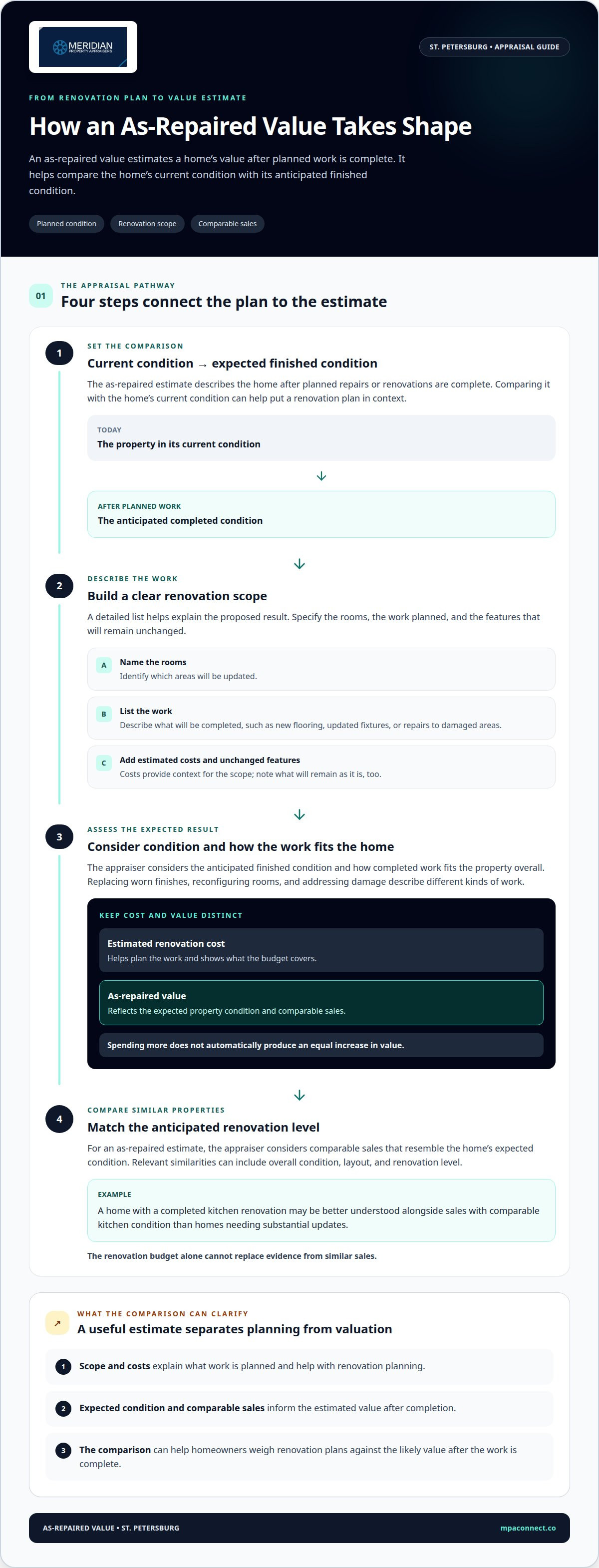
An as-repaired value estimates a home’s value after planned repairs or renovations are complete. In St. Petersburg, it can help compare a home’s current condition with its anticipated finished condition.
Renovation Costs and Value
Renovation costs are the expenses of completing work, while as-repaired value estimates the property after that work. There is no single average cost for common renovations in St. Petersburg: scope, materials, labor, and existing conditions affect the total. Replacing cabinet doors differs from rebuilding a kitchen, just as updating a bathroom differs from changing its layout.
Cost and value answer different questions. A project’s estimated expense helps you plan the work; appraised value reflects the home’s expected condition and comparable sales. Spending more does not automatically produce an equal increase in value. A detailed scope can show what the budget covers, such as new flooring, updated fixtures, or repairs to damaged areas.
Post-Renovation Value Determination
An appraiser estimates post-renovation value by assessing the expected finished condition and comparing the property with homes in similar condition. A detailed list of anticipated changes and estimated costs helps describe the proposed result. Identify which rooms will be updated, what work will be completed, and which features will remain unchanged.
The appraiser then considers how the completed work fits the home overall. A plan to replace worn finishes differs from one that reconfigures rooms or addresses damage. Costs provide context for the proposed work, but do not determine value by themselves. This distinction helps homeowners weigh renovation plans against the likely value after completion.
Comparable Sales After Renovations
Comparable sales are properties selected for similarities to the subject home’s expected renovated condition. For an as-repaired estimate, the appraiser uses comparable properties that resemble the anticipated finish and condition in the sales approach. A renovated home should therefore be compared with sales reflecting similar improvements, rather than relying only on properties in visibly different condition.
Relevant similarities may include the home’s overall condition, layout, and renovation level. For example, a home with a completed kitchen renovation may be better understood alongside sales with comparable kitchen condition than a property needing substantial updates. The appraiser uses the sales approach to assess these comparisons; the renovation budget alone cannot replace evidence from similar sales.
Risks of Over-Improving
Over-improving means completing upgrades beyond the level reflected in nearby properties. The risk is that renovation expenses may exceed the value buyers recognize in the home’s local comparison set. For example, extensive high-end finishes could sit well above the condition of nearby comparable sales, limiting how much those upgrades contribute to appraised value.
Compare the planned scope with the home’s existing condition and the expected finished condition of comparable properties. This doesn’t mean every distinctive improvement lacks value; it means cost and appraised value aren’t interchangeable. An as-is and as-repaired appraisal can help weigh selling in the current condition against investing in renovations. For sale-related valuation planning, consider appraisal support for a planned listing.
Estimating completed renovation condition
Yes. A homeowner can obtain an appraisal estimating value after planned renovations, even before work begins. This is an as-repaired estimate, not an inspection of completed work. The appraiser uses the proposed scope to assess the expected condition and select comparable properties. Specific details matter: “update the kitchen” leaves more unanswered than a room-by-room work plan.
Start with a clear inventory of the proposed changes. Identify each affected room, the planned work, and the features that will stay. For example, a kitchen plan might specify replacement cabinets, new counters, updated flooring, and retained appliances. A bathroom plan could identify new fixtures and flooring while noting that its existing layout will remain. These details distinguish a surface update from a broader renovation.
Estimated costs add useful context. Separate labor and materials when estimates provide that breakdown, and connect each amount to a specific task. A single total for “interior upgrades” does not show whether the budget covers flooring, fixtures, or room reconfiguration. Clear line items give the appraiser a more concrete picture of the anticipated finished condition and help identify changes in scope.
List each room receiving work, such as the kitchen, bathroom, or living area.
Describe planned materials and finishes, such as tile flooring or new cabinetry.
Note layout changes, including removed partitions or relocated fixtures.
Record which areas or features will remain unchanged.
Describe the expected result clearly enough to distinguish planned work from assumptions. If an estimate describes a “modernized bathroom,” clarify what work it includes. Does it cover the vanity, flooring, and fixtures, or only the lighting? These plans create different finished conditions. Likewise, an open-kitchen plan should explain which wall or partition will change and how the space will connect afterward.
Plans can change during construction. If the selected materials, room arrangement, or work scope differs from the original description, the expected condition may change too. Keep revised estimates and updated project notes together. Replacing planned laminate with stone counters, for example, changes the described finish, while adding a bathroom remodel changes the scope. Clear records help align the valuation request with the work intended.
An as-repaired estimate is useful when weighing renovation choices before committing to them. It can help compare a home’s current condition with its anticipated condition and inform whether proposed work fits the homeowner’s plans. It does not certify that renovations are complete. After construction, the actual finishes, workmanship, and layout can be observed directly, giving a later appraisal a view of the home as it stands.
How kitchen and bathroom updates affect appraisal value
In St. Petersburg, kitchen and bathroom updates can affect appraised value through condition, layout, and energy-efficient features. Permits and code-compliance records can help document renovation work when applicable, but neither automatically assigns value. An appraisal considers the home’s observable condition; it is not a code-compliance determination.
A kitchen’s contribution depends on how its updates function within the home. Improved storage, clear work areas, and a practical connection to the dining space can make the room more usable. An appraiser considers the kitchen as part of the property, rather than treating a new appliance or finish as a guaranteed value increase. Overall renovation quality and completeness also shape the description of condition.
Bathrooms are assessed in context, too. A renovated bathroom with usable fixtures and coordinated finishes presents a different condition from one with incomplete work or visible wear. If the bathroom’s arrangement has changed, its resulting functionality matters alongside its appearance. An update may improve the home’s overall condition, but the value recognized in the appraisal depends on how the finished property compares with relevant sales.
Layout changes can affect both rooms and the spaces around them. A kitchen redesign that improves access to the dining area, for instance, may change how the home functions. A bathroom reconfiguration may make better use of its available space. Appraisers consider modern layouts alongside finish quality, not as isolated features. A visually striking renovation may carry less weight if the result makes everyday use less practical.
Energy-efficient features also contribute to the description of the property. A kitchen upgrade could include an energy-efficient appliance; a bathroom update might include an efficient fixture. Their presence does not establish a fixed dollar adjustment. The appraisal considers these features alongside condition, layout, and the property’s overall comparison with similar homes.
Record which kitchen and bathroom features were updated.
Describe layout changes and how they affect room use.
Keep available project documents that explain the completed work.
Identify energy-efficient features without assuming they determine a specific value.
Documentation can clarify the work’s scope. If permits were obtained, related records can help identify what was completed and when. Where code compliance is relevant, the appraiser’s valuation role remains distinct from a code review. Records for a changed room arrangement, for example, may explain the renovation, while the appraisal addresses the home’s condition and market value. This distinction clarifies what an appraisal can assess.
Ultimately, kitchen and bathroom improvements are considered as part of a complete property assessment. A functional layout, finished work, and updated features can inform the appraiser’s description and comparison of the home. No single surface, fixture, or appliance determines the result. The finished rooms are assessed alongside the rest of the property and comparable sales, keeping the valuation grounded in the home as a whole.
Post-renovation appraisals for refinancing and insurance
For refinancing, an appraisal can document the home’s value after completed renovations. For insurance, an updated valuation can help homeowners review whether coverage reflects the property’s changed condition and features.
Give the St. Petersburg appraiser a clear record of the work: renovation descriptions, itemized estimates or invoices, and available permits or completion documents. Identify affected rooms, materials, layout changes, and added features, such as energy-efficient appliances.
For a low appraisal in Pinellas County, compare the report with the home’s actual condition and renovation details. Identify specific factual errors or relevant comparable sales, then submit documented concerns through the lender’s appraisal review process for a mortgage transaction.
Refinancing decisions involve more than renovation spending. The appraisal describes the property’s market value based on its condition and relevant comparable sales. A finished kitchen and updated bathrooms can be documented as improvements, while incomplete work or unrelated deferred maintenance remains part of the property’s overall picture. Renovation receipts explain the scope, but appraised value reflects the home and market evidence, not simply the total invested.
Insurance serves a different purpose. A post-renovation appraisal can provide information for reviewing coverage after material changes, such as a completed addition or substantial interior renovation. Keep the appraisal and renovation records together. A clear record distinguishes original features from later work and gives homeowners useful information when discussing coverage needs with an insurer. The appraisal documents value; it does not set policy terms or determine the insurer’s coverage decision.
Prepare a concise project file with the following details:
Room-by-room descriptions of completed renovations.
Invoices or estimates identifying the work and materials.
Available permits and records showing completed work.
Notes on layout changes and energy-efficient features.
When reviewing a report, focus on evidence rather than a preferred outcome. Check whether the appraiser described the renovated rooms accurately, recognized completed work, and used comparable properties that reflect a similar finished condition. If a report says a bathroom remains outdated despite a completed remodel, provide clear documentation and identify the affected report section. A request grounded in specific corrections gives the review a focused basis, unlike a general disagreement with the value.
Keep refinancing and insurance goals distinct: one appraisal records value for a lending decision, while an updated valuation can inform an insurance coverage review. If valuation also supports a planned sale, request an appraisal for your listing.
Meridian Property Appraisers Inc.: Pre-Probate Inherited Properties Appraisal
Meridian Property Appraisers Inc. provides Pre-Probate Inherited Properties Appraisals for people who need a valuation of an inherited home. If the property has recently been renovated, an appraisal can document its condition and features for estate-related decisions. Keep renovation records and a clear summary of completed work available to support the property’s description.
This appraisal can be relevant when family members need a considered view of an inherited home’s value before deciding what comes next. The report addresses the property valuation, while renovation records help clarify what has changed. Contact Meridian Property Appraisers Inc. to request a Pre-Probate Inherited Properties Appraisal for an inherited property.
Make your next valuation decision with clarity
Renovations are an investment in how you use your home, but decisions about refinancing, insurance, or a future sale benefit from a valuation suited to that purpose. Understanding your home’s post-renovation appraisal value in St. Petersburg can help you plan the next conversation with your lender, insurer, or family. Keep project records organized so the work is easy to explain.
If your valuation needs relate to a divorce, Meridian Property Appraisers Inc. offers a Divorce Appraisal. The right report can provide a documented basis for a property-related decision, separate from the renovation work itself. For a considered next step, contact Meridian Property Appraisers Inc. to discuss your appraisal needs. A clear plan can help you move forward with greater confidence.
Frequently Asked Questions
When is this report needed?
A post-renovation appraisal is useful when you need a documented valuation after work, such as for refinancing or reviewing insurance coverage. It can also help before renovations begin: an as-repaired estimate compares the home’s present condition with its expected condition after planned work. For example, a homeowner deciding whether to renovate or sell a damaged property can use the two valuations to weigh the options.
How much value do kitchen and bathroom renovations add to St. Petersburg homes?
There is no fixed value increase for kitchen or bathroom renovations in St. Petersburg. The appraisal considers completed work alongside the home’s overall condition, layout, features, and comparable sales. Replacing worn fixtures, for example, may affect the property differently from completing a full remodel that changes room functionality. Renovation spending alone does not establish how much value an appraiser will recognize.
How do post-renovation appraisals affect refinancing, HELOCs, and property taxes in Pinellas County?
An updated appraisal can provide valuation information for a refinancing or HELOC application, but the lender makes its decision according to its own requirements. A private appraisal does not itself determine a Pinellas County property tax bill. Keep these purposes separate: a lender uses valuation information for financing, while a property tax question concerns the county’s assessment. An appraisal can document condition, but it does not replace those separate decisions.


Comments